
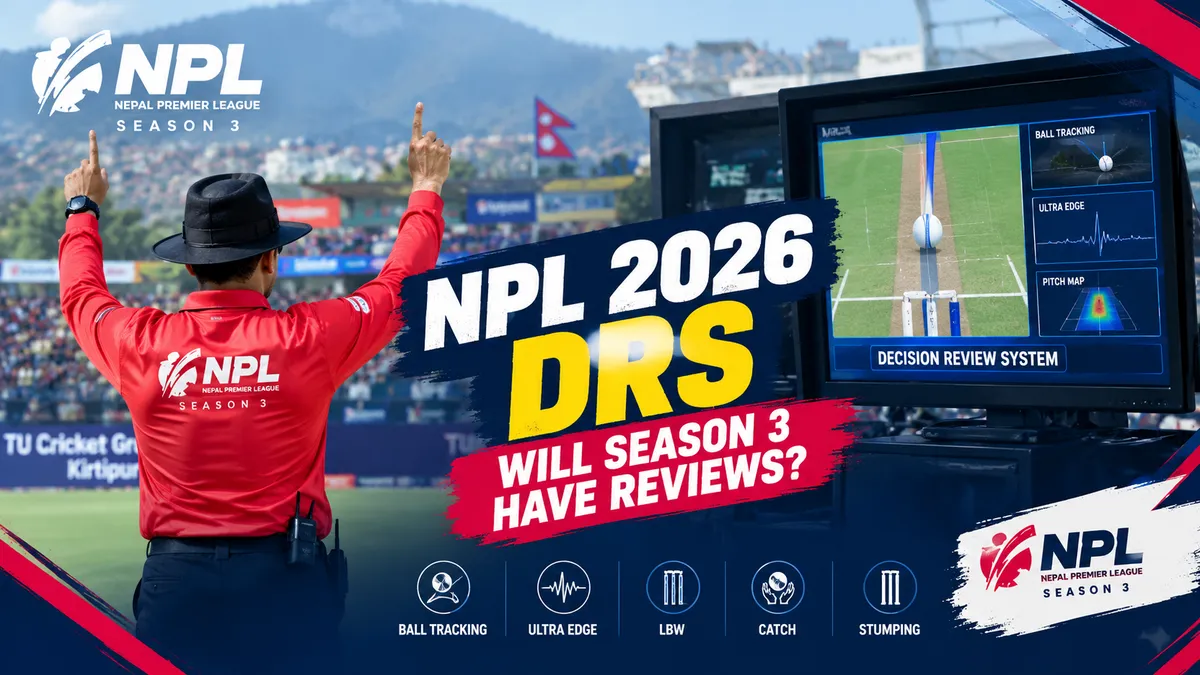
NPL 2026 DRS: Will NPL Season 3 Have DRS?
npl 2026 drs is not yet officially confirmed. CAN says it is testing two systems and DRS could debut in Season 3 if reliable. Last updated Oct 8, 2026.
As of October 8, 2026, the npl 2026 drs decision is not yet officially confirmed. The Cricket Association of Nepal has not announced a final call on whether the Decision Review System will be used in Nepal Premier League Season 3. NPL Season 3 is scheduled to run from October 26 to November 21, 2026, with 8 teams and 32 matches, all at the TU International Cricket Ground in Kirtipur, Kathmandu. CAN has said it is testing technology and could introduce DRS this season if the system proves reliable, but no provider has been named and no details on reviews or match coverage have been confirmed.
What has CAN said about DRS in NPL Season 3?
On September 20, 2026, CAN Secretary Paras Khadka said preparations were underway to introduce DRS in the NPL for the first time. According to reports from OnlineKhabar and Republica on that date, Khadka said CAN had already tested technology from two companies and would make a final decision after evaluating its accuracy and effectiveness. He said if the technology is found to be reliable, CAN could start DRS from this edition.
Khadka said a full World Cup-level DRS needs considerable resources, so CAN is looking for a reliable system suitable for a domestic league. In the same briefing he said the ICC sanction process for the NPL has reached its final stage, and the league could receive List A or T20 status. If sanction and status are granted, player performances would be officially recorded in career records, which was not the case for the first two editions. As of the last official update, CAN had not confirmed a provider, cost, or operational details for DRS.
Which matches could use DRS?
CAN has not announced whether DRS would cover all 32 matches of NPL Season 3 or only a portion of the tournament. There has been no official statement on whether reviews would be available from the opening match on October 26 or only in the playoffs. Unconfirmed reports on some aggregator sites have suggested limited use only in the four knockout matches, Qualifier 1 on November 17, Eliminator on November 18, Qualifier 2 on November 19 and the final on November 21, but CAN and major Nepali outlets have not confirmed that plan. Until CAN issues a formal playing conditions update, fans should treat match-specific coverage as undecided.
Why DRS matters for the NPL
The question of will NPL have DRS has grown after disputed calls in the first two seasons. Republica reported that questions about umpiring arose during the inaugural season in 2024 and grew louder in the second, with reports alleging more than two dozen incorrect decisions by on-field and television umpires by the sixth match of NPL Season 2. LBW, catches, no-balls, stumpings and caught-behind appeals all came under scrutiny, and some decisions remained disputed even after television replays were examined.
Two matches from Season 2 were cited as examples. In Chitwan Rhinos versus Lumbini Lions, a dismissal of Sandeep Jora went to the television umpire but viewers questioned a front-foot no-ball, while a stumping review of Rohit Paudel took around six to seven minutes and drew dissatisfaction from players. In Sudurpaschim Royals versus Kathmandu Gorkhas, Josh Brown was given out LBW when replays appeared to show bat involvement, a caught-behind appeal against Arif Sheikh was turned down despite a later replay suggesting an edge, and Kathmandu wicketkeeper John Simpson was given out LBW despite footage appearing to show contact with his glove. He signalled for a review, but the competition had no formal DRS at the time.
The issue also matters because the stakes are higher this year. International signings including David Warner for Kathmandu Gorkhas, along with Jimmy Neesham, Shakib Al Hasan, Sikandar Raza and Charith Asalanka, have raised the profile of the league. OnlineKhabar reported that CAN is also expecting further high-profile names after ICC sanction is received. If the NPL secures T20 or List A status, every run and wicket will count in official records, which makes accurate decision-making more important for players and teams.
What is DRS, and how do reviews work?
The Decision Review System NPL fans are asking about is a process that lets teams challenge certain on-field umpiring decisions and have them checked with available technology. In general terms, a captain or batter asks for a review within a short time limit, and the television umpire examines replays and other tools to decide whether to uphold or overturn the original call.
For casual fans, it helps to know how other franchise T20 leagues have handled it. Most leagues started with a limited number of unsuccessful reviews per team per innings, often one review, and some later moved to two unsuccessful reviews per innings to reduce the impact of errors. The exact number of reviews, which types of dismissals can be reviewed, and what technology is used for ball tracking or edge detection are set in the tournament playing conditions. CAN has not yet announced any of these details for Nepal Premier League DRS, so the number of reviews per team and the list of reviewable decisions remain to be confirmed.
Challenges of bringing DRS to a domestic league
Introducing NPL umpiring support through DRS involves more than cameras. Republica noted that usefulness depends on camera angles, picture quality, trained operators, capable television umpires and clear rules that make the process understandable for players and viewers. A limited system may not be able to assess every type of appeal, and CAN will need to explain exactly which decisions teams can review and what evidence officials will use.
Cost is another factor highlighted in the September 20 coverage. Cameras, replay equipment, tracking technology, technical staff and television umpires require funding. A full international setup may be beyond the budget of a domestic league, while a smaller system still needs to produce dependable decisions within its stated limits. Reviews can also add time to matches, so any NPL Season 3 DRS implementation would need a process that reaches decisions promptly and keeps the game moving. Broadcast expansion this year to Star Sports, Himalaya Television and NetTV streaming could support better reviews if the cameras capture the needed angles, but it will also make disputed calls more visible to audiences.
What fans should watch for next
With the opening match between defending champions Lumbini Lions and Sudurpaschim Royals set for October 26 at Kirtipur, several announcements are expected in the next two weeks. The key CAN DRS update to watch for is a formal confirmation on whether DRS will be used at all in Season 3, and if so, the name of the technology provider and the extent of its capabilities. Fans should also look for the official playing conditions, including how many reviews each team will receive and whether reviews will apply to LBW, caught behind and other decisions.
The ICC sanction decision is closely linked. CAN has said the process is in its final stage, and confirmation of List A or T20 status would affect how performances are recorded. The league's broadcast and ticketing announcements have already begun, including sponsorships and OTT rights, so the DRS decision is now one of the last major operational updates pending before the tournament starts.
Closing note and last updated date
As of today, DRS for NPL Season 3 remains under evaluation, not confirmed. CAN has publicly said it is testing two systems and is in favour of implementing a reliable option for a domestic league if accuracy is proven. Unconfirmed reports suggesting use only in knockout matches have not been verified by CAN or by major Nepali outlets. This situation may change quickly as CAN finalises technology checks and ICC sanction. This article will be updated when an official announcement is made. Last updated: October 8, 2026.